To display a mineral specimen well at home, place it where it will be seen at the right distance, light it from one side with soft warm light, and keep it out of direct sunlight. Choose a stable, dust-protected spot away from steam and humidity. Most specimens need little more than this to look their best and stay unchanged for years.
Where should you put a mineral specimen?
The best place is a shaded shelf, cabinet or side table at or near eye level, away from windows, heat and moisture. Some common places work better than others:
| Place | Suitability |
|---|---|
| Shaded shelf or bookcase | Good for small and medium specimens; viewed up close |
| Closed glass cabinet | Best for small, fragile or light-sensitive pieces; keeps dust out |
| Console or sideboard | Good for larger pieces viewed from across a room |
| Sunny windowsill | Avoid: direct sunlight and daily temperature swings |
| Bathroom | Avoid: steam and high humidity |
| Kitchen | Avoid: humidity and cooking grease |
| Above a radiator or vent | Avoid: heat, dry air and moving dust |
Keep heavy specimens on low, stable surfaces, and keep fragile or toxic minerals out of reach of children and pets.

How much space does a specimen need?
A specimen needs enough space to be seen as one complete form at the distance people will look at it. Size decides where it reads best. The guidance below is AURENTHE's own rule of thumb:
- Small specimens, under about 5 cm: eye-level shelves or clear display boxes, where they are seen up close.
- Medium specimens, about 5 to 10 cm: a shelf or cabinet with at least a hand's width of empty space on each side.
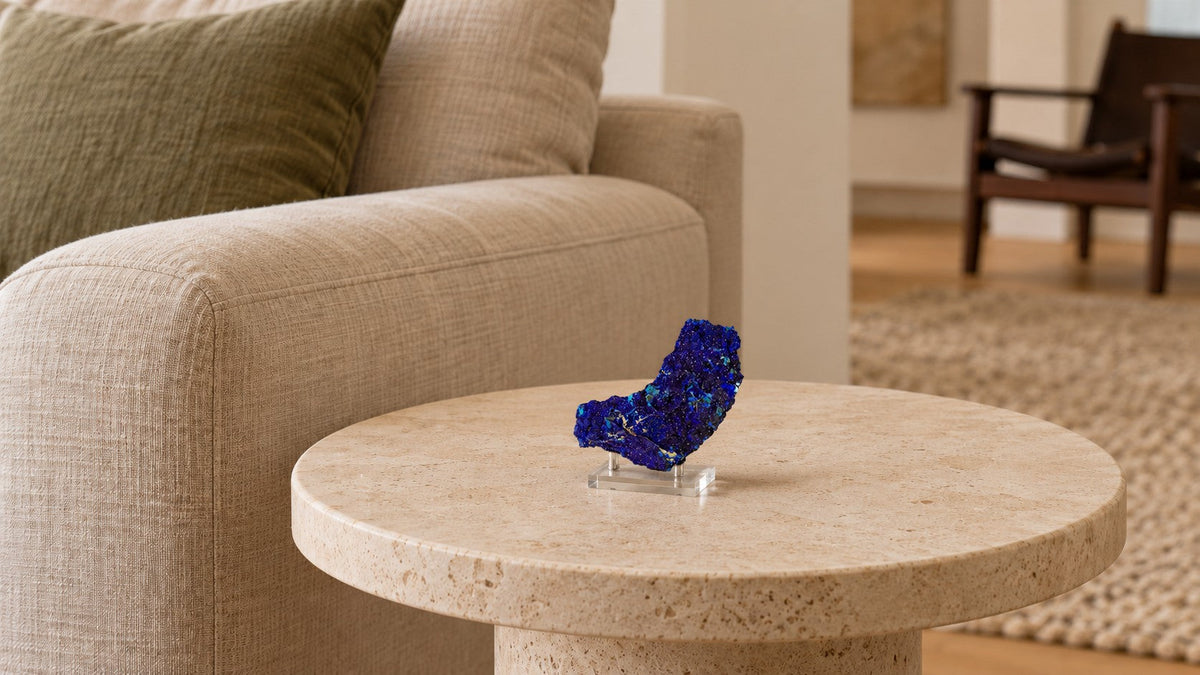
- Large specimens, over about 10 cm: a console, side table or plinth, where they can be seen from across the room.


Let one specimen lead
A display looks calmer when one specimen is clearly the focus. Start with the piece you want to see first, then add smaller pieces only if they support it through shared color, a similar locality or a contrasting shape. Odd-numbered groups of three or five, set at different heights, are easy to read at a glance.

A mineral can also share a shelf with a non-mineral object of similar height, such as a sculpture, vase or stack of books, as long as the specimen keeps some empty space around it.

How should you light minerals?
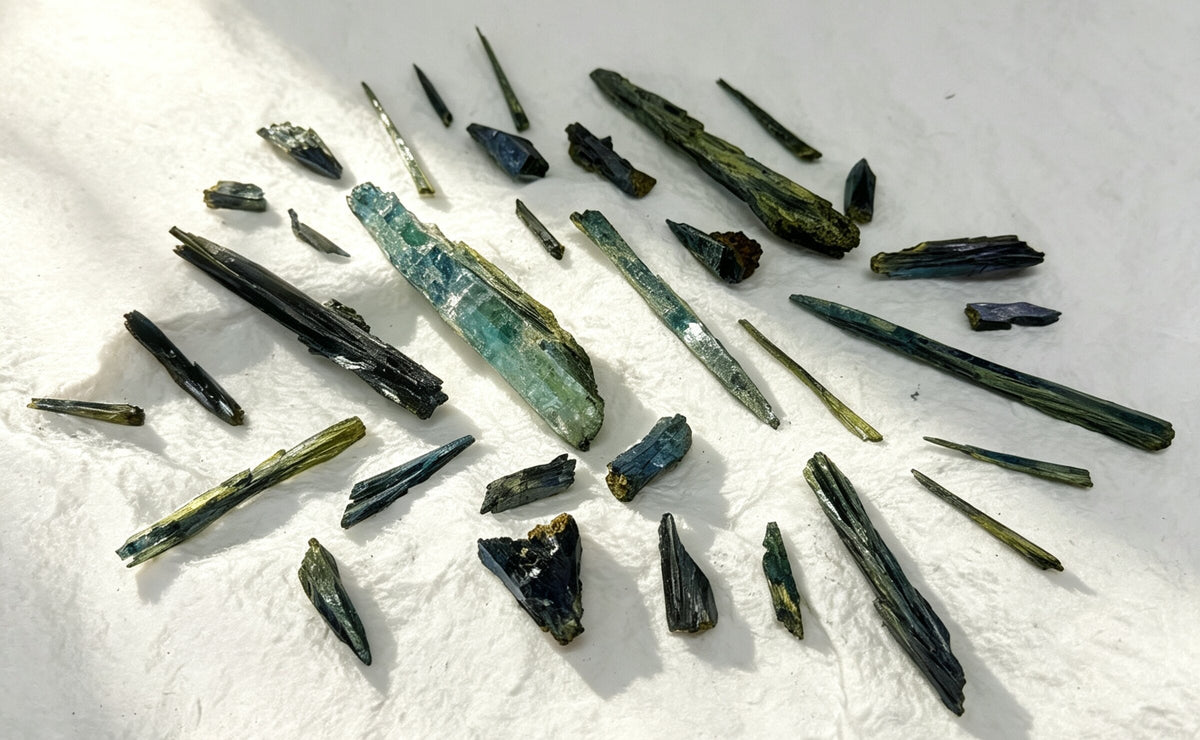
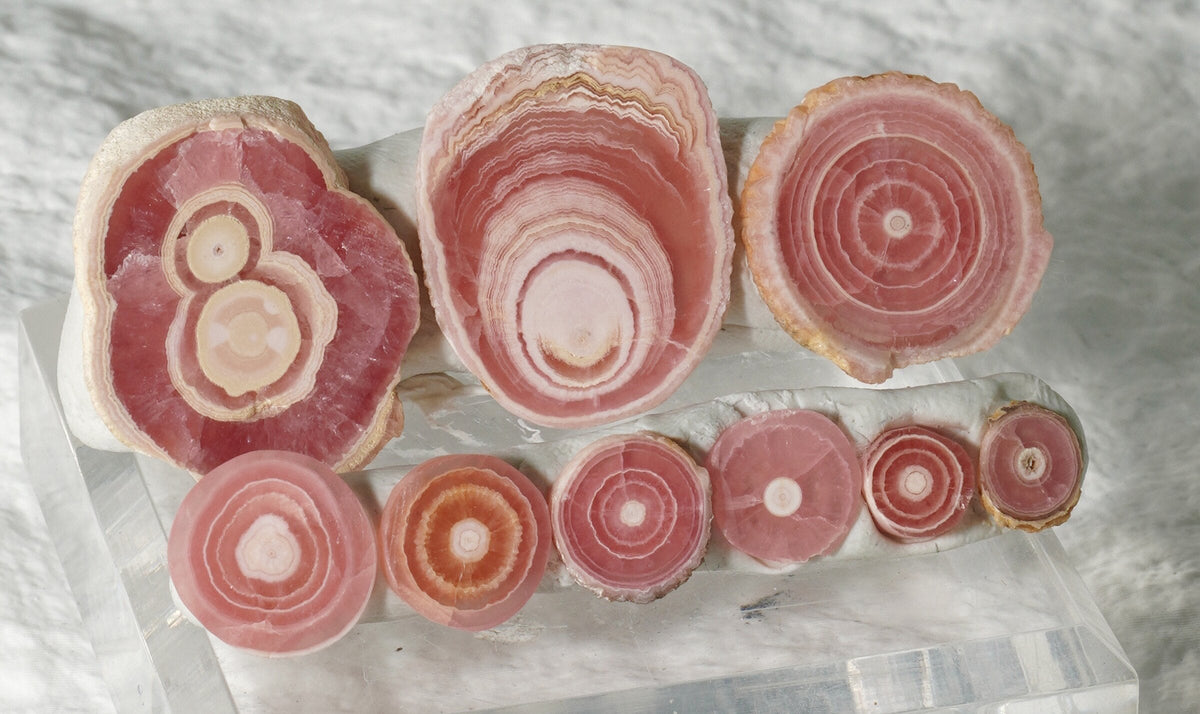
Light minerals with soft, warm light from one side. Side light shows crystal faces, luster and matrix texture, while flat overhead light tends to hide depth. The studio photographs below were taken with a single warm light from one side against a dark background, and the same approach works on a shelf at home.
- Use a small LED lamp or spotlight rather than a halogen bulb. Halogen lamps in closed display cases can be a hidden source of ultraviolet light.
- Place the light to one side and slightly above the specimen.
- Warm white light flatters metallic and earthy tones; cooler light shows blues and greens more neutrally.
- Switch display lights off when no one is looking. Light damage adds up over time.


Which minerals fade or change in light?
Several popular minerals can fade, darken or break down with long exposure to strong light, especially sunlight. Keep them in low light or in closed cabinets:
| Mineral | What can happen |
|---|---|
| Kunzite | Pink to violet color can fade with heat and intense light |
| Amethyst | Purple can fade in strong light |
| Fluorite (blue and green) | Color can fade or turn grayish |
| Vivianite | Darkens from green toward blue-black |
| Celestite (blue) | Listed by museum conservators as light-sensitive |
| Realgar | Breaks down into a powdery orange material |
| Cinnabar | Can darken on the surface |
| Brown topaz, yellow barite and calcite | Some specimens fade or change color |

Not every specimen of these minerals reacts the same way, and reports vary. Our guide to why vivianite darkens in light explains one of the best-known cases.
Humidity, heat and dust
Most minerals are stable in ordinary indoor air, but a few conditions cause slow damage:
- Humidity: museum conservators recommend keeping mineral collections at roughly 45 to 60% relative humidity. Above about 60%, pyrite and other sulfides can begin to decay.
- Very dry air: below about 35%, a few minerals can lose water and crack or crumble.
- Heat and swings: radiators, vents and sunny spots heat and cool a specimen every day, which can stress fragile crystals.
- Dust: clear lidded boxes or closed cabinets keep dust off. For open pieces, use a soft brush or a gentle puff of air. Avoid water and cleaning sprays.
More general advice is on our Mineral Care page.
Bases and stands
A base lifts a specimen off the shelf, stops it rocking and makes it easier to see. A flat acrylic base suits pieces that sit steadily on their own. A stand with supports suits slices and specimens that need to be held upright or at an angle. Clear acrylic keeps attention on the mineral rather than the support.

Before placing a specimen, check that it sits without tipping and that no thin crystal tips touch the base or the wall.
The room scenes in this article are styled images made with real AURENTHE specimens.
Frequently asked questions
Can I keep crystals and mineral specimens on a windowsill?
It is better not to. Direct sunlight can fade or darken some minerals, including kunzite, amethyst, some fluorite and vivianite, and a sunny windowsill also heats and cools the specimen every day. A shaded shelf a few steps from the window is safer.
What is the best light for displaying minerals at home?
Soft, warm light from one side. A small LED lamp or spotlight placed to the side shows crystal faces and luster better than flat overhead light. Avoid halogen bulbs in closed display cases, which can be a hidden source of ultraviolet light.
Which minerals should not be kept in the sun?
Kunzite, amethyst, blue or green fluorite, blue celestite, realgar, cinnabar, some brown topaz and vivianite are commonly listed as light-sensitive. When in doubt, keep a specimen out of direct sun.
Can I display mineral specimens in a bathroom or kitchen?
It is not recommended. Steam and humidity above about 60% can start pyrite decay and damage soluble minerals, and kitchen grease settles on crystal surfaces and is hard to clean.
How do I keep mineral specimens free of dust?
Display small specimens in clear lidded boxes or a closed cabinet. Remove dust from open pieces with a soft brush or a gentle puff of air rather than water or cleaning sprays.
How many specimens should I group together?
AURENTHE suggests starting with one specimen as the lead piece, then adding two or four smaller pieces at different heights, so that the group reads as three or five objects with one clear focus.